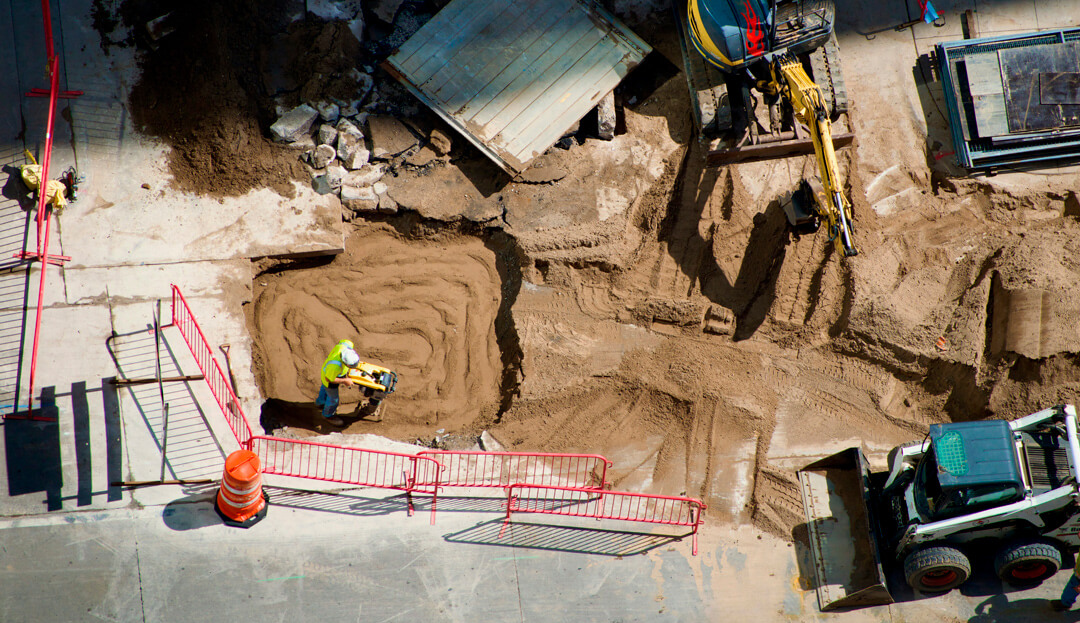
Across British Columbia, underground utility infrastructure is quietly becoming one of the most critical foundations of our future growth. From housing developments and transportation improvements to utility modernization and electrification projects, communities are relying on infrastructure that most people will never see. Yet the complexity required to deliver these projects continues to increase.
As our cities grow and demands on utility networks expand, project owners are facing a reality that many in the industry already know well: successful infrastructure projects are no longer defined solely by technical expertise. They are increasingly defined by the ability to execute consistently, safely and reliably in highly complex environments.
“Underground infrastructure has always been challenging, but the level of coordination required today is unlike anything we’ve seen before,” says Sonia Hartwell, President of Berto Contractors. “Projects involve more stakeholders, more utilities and greater expectations around schedule certainty and public impact than ever before.”
A CHANGING INFRASTRUCTURE LANDSCAPE
Several forces are converging to reshape the infrastructure environment across Western Canada.
Electrification initiatives are driving significant investment in new electrical infrastructure. Communities are preparing for increased demand from electric vehicles, renewable energy projects and evolving power distribution requirements. At the same time, population growth continues to place pressure on municipalities to deliver new housing and supporting infrastructure at an accelerated pace.
Many communities are also facing the challenge of replacing aging underground systems that were installed decades ago. Water, sewer, stormwater and electrical infrastructure must be upgraded while maintaining service continuity for residents and businesses. Unlike greenfield developments, these projects often occur within dense urban environments where existing utilities, traffic management requirements and public expectations add multiple layers of complexity.
Adding to this challenge is the growing expectation that infrastructure projects be delivered faster, more sustainably and with fewer disruptions to the public. Owners and stakeholders are balancing ambitious timelines with increasingly complex regulatory requirements, environmental considerations and community expectations. The margin for error continues to narrow.
The result is a construction environment where careful planning and disciplined execution have never been more important.
THE RISKS OF GETTING IT WRONG
Infrastructure projects rarely operate in isolation. Delays on one project can impact developers, municipalities, utility providers and entire communities. Unanticipated utility conflicts can create schedule disruptions. Safety incidents can affect workers, project timelines and stakeholder confidence.
In today’s environment, project owners are increasingly looking beyond price when selecting construction partners. Reliability has become a critical consideration because the cost of unforeseen delays or execution challenges can quickly outweigh any initial savings.
This shift reflects a growing understanding that infrastructure projects require partners who can manage complexity proactively rather than reactively. The ability to identify risks early, communicate openly and adjust plans when conditions change has become just as important as the ability to complete the physical work itself.
WHAT EXECUTION RELIABILITY REALLY LOOKS LIKE
Execution reliability is often discussed in our industry, but it means more than simply completing work according to specification.
Reliable execution begins long before crews arrive on site. It starts with detailed planning, effective communication and a clear understanding of project risks. It requires strong field leadership, disciplined safety practices and teams that can adapt when site conditions inevitably change. Most importantly, it requires consistency.
Project owners need confidence that schedules are realistic, communication is transparent and challenges will be addressed quickly when they arise. The most successful projects are often the result of hundreds of small decisions made correctly throughout the lifecycle of a project rather than one major breakthrough moment.
“Reliable execution is about reducing uncertainty wherever possible,” says Hartwell. “You can’t eliminate every challenge on a construction project, but you can build processes, teams and relationships that allow you to respond effectively when those challenges emerge.”
Consistency also creates trust. When owners, consultants and utility providers know they can rely on a contractor to follow through on commitments, projects tend to move more efficiently. Issues are identified earlier, solutions are developed faster and teams remain focused on achieving shared objectives rather than managing avoidable disruptions.
BC HYDRO AND THE FUTURE OF GRID MODERNIZATION
One of the most significant drivers of infrastructure investment across British Columbia is the ongoing modernization and expansion of the electrical grid.
As demand for electricity grows, utilities are investing in projects designed to improve system reliability, support economic development and prepare communities for increased electrification. New substations, distribution infrastructure upgrades, underground electrical installations and network expansion projects are becoming increasingly common across the province.
These initiatives require a high degree of coordination among utilities, engineers, municipalities and construction partners. In many cases, work must be completed within active communities while minimizing disruption to residents, businesses and existing infrastructure.
For contractors, these projects demand more than technical expertise. They require an understanding of stakeholder management, scheduling discipline and the ability to execute safely within highly regulated environments. As grid modernization continues to accelerate, execution reliability will remain a critical factor in delivering these projects successfully.
COLLABORATION IS NO LONGER OPTIONAL
As underground utility projects become more interconnected, collaboration has become one of the most valuable skills a construction partner can bring to the table.
Today’s projects often require coordination between municipalities, utility providers, engineers, developers, consultants and contractors. Success depends on open communication, early issue identification and a shared commitment to solving problems before they become larger obstacles.
The ability to bring stakeholders together and maintain alignment throughout a project can significantly reduce risk while improving project outcomes. This collaborative mindset is becoming increasingly important as infrastructure projects continue to grow in scale and complexity.
Successful collaboration also extends beyond formal project meetings. It is built through strong relationships, mutual respect and a willingness to work toward common goals. When project teams operate with transparency and trust, they are better positioned to respond to challenges and maintain momentum throughout construction.
EXPERIENCE REMAINS A COMPETITIVE ADVANTAGE
While technology continues to improve project planning and execution, experience remains one of the most effective tools for managing risk.
Every underground utility project presents unique challenges. Existing site conditions, stakeholder requirements, permitting processes and unforeseen circumstances can vary significantly from one project to the next. Teams that have successfully navigated similar situations are often better equipped to anticipate issues before they impact schedules or budgets.
Experience helps identify potential conflicts earlier, develop more realistic construction strategies and create contingency plans that minimize disruption when unexpected conditions arise.
In an industry where uncertainty is often unavoidable, experience provides an important layer of predictability. It allows teams to draw on lessons learned from previous projects and apply those insights to new situations. While no two projects are identical, experience often provides the perspective needed to make informed decisions when conditions change.
LOOKING AHEAD
Infrastructure investment across British Columbia is expected to remain strong for years to come. Electrification, housing growth, transportation improvements and utility modernization initiatives will continue to create demand for underground utility construction throughout the province.
As these projects become larger and more complex, execution reliability will continue to separate successful projects from unsuccessful ones. The organizations delivering the greatest value will be those that combine technical expertise with strong planning, collaboration and a proven ability to execute consistently under challenging conditions.
“The infrastructure we build today will support communities for decades to come,” says Hartwell. “That responsibility requires a long-term mindset, a commitment to quality and a focus on doing the work right the first time.”
The future of our communities depends on infrastructure that is built to last. Delivering that infrastructure requires more than construction expertise alone. It requires trusted partners who understand that reliability is not simply an outcome, but a discipline practiced every day, on every project, from the first plan review to final completion.