Coordinating Civil Construction with Utility and System Operators in a High-Demand Grid Environment
Power demand in British Columbia is no longer a future scenario. It is an active force reshaping how civil construction must be delivered across the province. The shift toward electric-powered systems across transportation, buildings and industry is increasing reliance on stable, high-capacity infrastructure. At the same time, renewable energy integration is adding variability to the grid, while data centres are introducing sustained, high-density load that cannot tolerate disruption. These combined pressures are accelerating investment in transmission lines, substations and distribution networks, placing civil construction at the center of this transformation.
For civil contractors, this shift is not simply about more work. It is about delivering critical infrastructure in environments that are more complex, more constrained and less forgiving than ever before.
Expanding Grid Infrastructure Requires Precision Civil Work
Across British Columbia, power and grid expansion projects depend on extensive civil scopes that form the backbone of electrical systems. Access roads must be constructed through remote and often difficult terrain to enable site access. Foundations must be engineered and installed to exact tolerances to support transmission and substation infrastructure. Duct banks, underground conduit systems and joint trenching must be executed with precision to support current demand while allowing for future capacity. Drainage systems and environmental mitigation measures must also be carefully managed to meet regulatory standards and protect surrounding ecosystems.
This work is foundational, but it is no longer routine. Civil construction is now being executed within active utility environments where existing infrastructure must remain operational throughout the build. This introduces a level of complexity that requires careful planning, disciplined execution and continuous coordination across multiple stakeholders.
Safety as a System-Wide Operational Discipline
As grid demand increases, the tolerance for risk continues to decline. Civil construction teams are working in closer proximity to energized systems, live utilities and critical infrastructure. In this context, safety extends far beyond compliance. It becomes a system-wide operational discipline that directly impacts project outcomes.
Sonia Hartwell, President of Berto Contractors, underscores this shift. “As demand on the grid increases, the tolerance for risk disappears. Safety protocols must evolve alongside the infrastructure itself. We are investing in training, systems and leadership to ensure our teams can operate confidently within these environments every single day.”
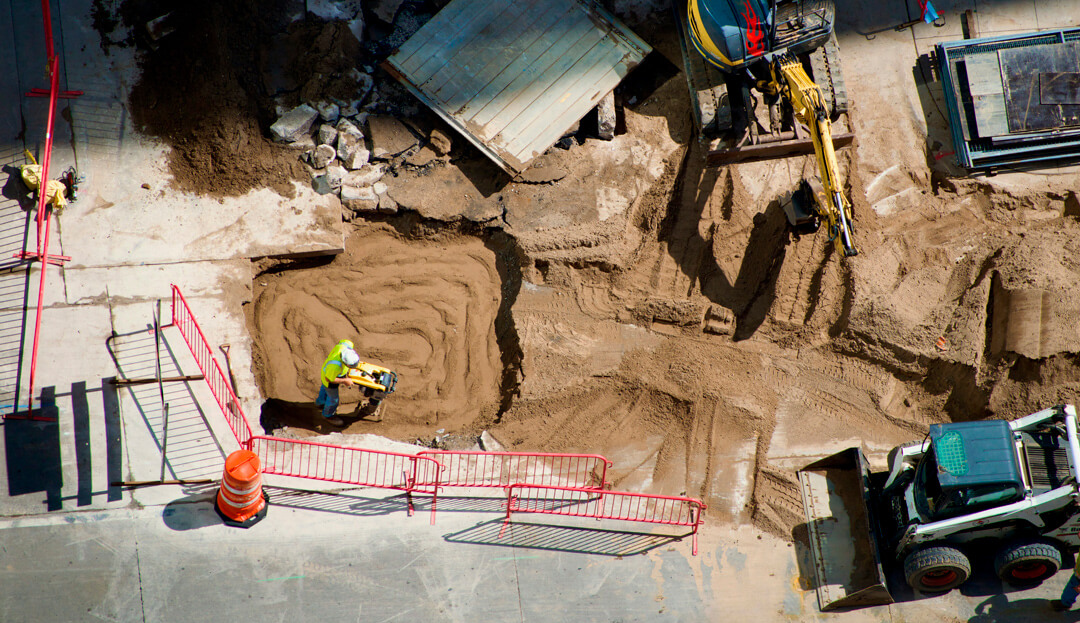
This approach reflects the reality of modern utility construction. Every phase of work, from excavation to installation and backfill, must be executed with a clear understanding of system risk. Teams must anticipate potential conflicts, mitigate hazards before they emerge and maintain strict adherence to evolving safety protocols. In high-demand environments, safety is not a parallel priority. It is integral to maintaining system integrity and project continuity.
Predictability and Coordination in Utility Construction
Alongside safety, predictability has become a defining requirement for civil contractors supporting power infrastructure projects. Utility operators rely on consistent, controlled execution to align civil construction with electrical installation, commissioning and system activation. Delays or inconsistencies in civil scope can disrupt tightly scheduled project timelines and introduce risk across the broader network.
Predictable delivery is built through disciplined planning, experienced crews and repeatable processes that reduce variability on site. It requires strong field leadership that can maintain control over changing conditions while ensuring alignment with project partners. As timelines compress and demand increases, this level of operational consistency becomes essential.
Coordination is the element that ties safety and predictability together. Power infrastructure projects now involve continuous interaction between civil contractors, electrical teams and system operators. Work must be sequenced around outage windows, system constraints and overlapping scopes that often include hydro, telecom and municipal infrastructure within shared corridors. Civil contractors are no longer operating independently. They are functioning as integrators within a broader delivery ecosystem.
This requires a deep understanding of how infrastructure systems behave under pressure, along with the ability to communicate clearly and adapt quickly as conditions evolve.
Sonia Hartwell reinforces this perspective. “We are preparing our business for a more complex future. That means building teams who understand not just civil construction, but how their work fits within the larger system. Our role is to bring consistency, discipline and coordination to projects that are becoming more demanding every year.”
Building the Grid with Discipline and Control
As British Columbia continues to expand its power infrastructure, expectations placed on civil construction will continue to rise. The pace of development will accelerate, but so will the need for precision, control and accountability across every phase of delivery.
Success in this environment will not be defined by who can simply complete the work. It will be defined by who can deliver safely, predictably and in close coordination with electrical and system operators. These capabilities are no longer differentiators. They are the standard required to support a modern, high-demand grid.
Civil construction remains the foundation of this transformation. How that foundation is built will determine how effectively the grid can support the future.