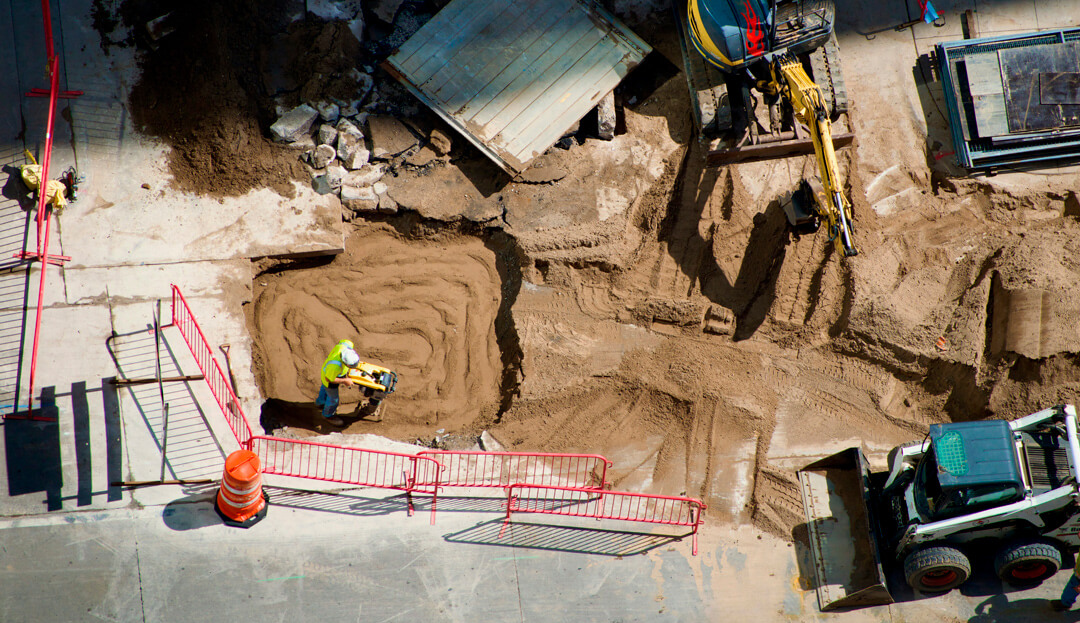
B.C.’s civil construction market in 2026 is not defined by a single boom or slowdown. It is defined by a reallocation of demand. Private development remains sensitive to financing and confidence, while public and utility-led programs are accelerating to support housing, electrification, connectivity, climate resilience and the renewal of aging infrastructure. National outlooks point to civil construction as the primary growth category in 2026, even as other segments face continued volatility.
“2026 is not about chasing volume,” says Sonia. “It’s about delivering certainty in an environment where complexity, risk and public expectation are all rising. For civil contractors in British Columbia, the opportunity is real, but only for those who can execute with discipline, foresight and accountability. This is a year that will reward firms who think ahead, plan deeply and build with purpose.”
For contractors working across telecom, hydro, municipal infrastructure and large development enabling works, the opportunity is real. But so are the expectations. Owners, regulators and communities are demanding greater certainty: certainty of permitting, certainty of cost logic, certainty of schedule, certainty of safety and certainty of long-term performance. The firms that can deliver that certainty will shape the next cycle of growth in British Columbia.
These are the top ten trends most likely to define civil construction in B.C. in 2026 and how they will influence strategy, investment and execution.
- Civil becomes the growth engine of the construction economy
Across Canada, civil construction is forecast to be the strongest performing segment in 2026, driven by transportation, power, water and utility infrastructure. In B.C., this aligns with visible pipelines tied to municipal renewal, grid upgrades, housing-enabling works and major corridor programs. While private vertical construction remains uneven, public and utility-led capital programs provide a more stable foundation for civil contractors with the right capabilities and scale.
- Permitting speed becomes a competitive differentiator
Governments in B.C. are actively pursuing faster delivery of major projects. As permitting reform and streamlining become policy priorities, owners increasingly expect their delivery partners to operate with the same urgency. In 2026, pre-construction and approvals management will be judged as part of performance, not overhead. Contractors that can demonstrate structured permitting workflows, clear stakeholder mapping and predictable turnaround times will reduce risk for clients and gain a strategic edge in procurement.
- Housing-enabling infrastructure moves to the front of the capital queue
With housing supply a top political and economic priority, investment is shifting toward the infrastructure that makes development possible: water, wastewater, stormwater, roads and servicing. Large funding programs are flowing to municipalities and regional utilities to accelerate this work. For civil contractors, this means steady demand for underground infrastructure, urban corridor construction and restoration excellence, often under tight schedules and intense public scrutiny.
- Power and grid expansion accelerates with electrification
Electrification, renewable integration and rising load from data centres and industry continue to drive investment in transmission, substations and distribution networks. In B.C., this translates into sustained civil scopes supporting power projects: access roads, foundations, duct banks, undergrounding, drainage and environmental mitigation. The ability to work safely and predictably in utility environments, and to coordinate tightly with electrical and system operators, becomes a core capability rather than a niche.
- Data centres reshape the profile of heavy civil and utility work
The growth of data centres across Western Canada is creating a new class of schedule-critical, power-intensive developments. These projects demand robust site development, heavy underground servicing, redundant power and fibre routes, and rapid delivery once approvals are in hand. For civil contractors, data centres blur the line between traditional development and utility infrastructure, favouring firms that can integrate civil, power and telecom coordination into a single, disciplined delivery model.
- Broadband and telecom corridors remain a durable investment theme
Connectivity continues to be treated as essential infrastructure, particularly in rural, northern and underserved regions. Fibre expansion and network hardening programs keep linear construction, ducting, vault installation and restoration in steady demand. In 2026, success in telecom civil will hinge less on pure production capacity and more on corridor management: traffic control, stakeholder engagement, environmental compliance, quality of reinstatement and clean handover to splicing and operations teams.
- Cost volatility and supply chain risk force more sophisticated pricing models
Tariffs, global trade uncertainty and equipment lead times remain sources of instability. Even when specific materials are not directly affected, pricing and availability can shift quickly. In this environment, estimating based solely on historical unit rates is no longer sufficient. Contractors in 2026 will need to embed escalation logic, alternate sourcing strategies and transparent risk allocation into their bids and contracts, turning cost uncertainty into a managed variable rather than an unmanaged exposure.
- Labour strategy shifts from availability to productivity and retention
While pockets of labour availability may improve as major projects wind down, the real competitive battle in 2026 is productivity and continuity. Owners are less tolerant of schedule slippage, remobilization and rework, particularly in dense urban and municipal environments. Civil contractors that invest in crew planning, equipment reliability, digital field reporting and repeatable work methods will gain an advantage not only in delivery, but in their ability to attract and retain skilled people.
- Climate resilience and restoration quality become central to value
Extreme weather, flood risk and environmental performance are reshaping how infrastructure is specified and evaluated. Municipalities and utilities are raising standards for drainage, erosion control, materials performance and long-term restoration. In 2026, resilience is no longer a design-only issue. It is a construction issue. Firms that can demonstrate superior restoration practices, durable reinstatement and proactive mitigation will reduce lifecycle risk for owners and strengthen their standing as trusted partners.
- Digital transformation becomes an operational necessity
Technology adoption in civil construction is moving beyond experimentation. The focus is shifting to practical systems that improve certainty: real-time production visibility, cost forecasting, permitting workflows, quality documentation and safety analytics. In 2026, digital tools are increasingly evaluated by one standard: do they reduce risk and improve predictability? Contractors that build strong field-to-office data flows and disciplined operating systems will be better positioned to make faster decisions, control costs and deliver with confidence.
⸻
What these trends mean for B.C.’s civil construction leaders
Taken together, these ten trends point to a market where opportunity is real, but earned. Growth will favour firms that can operate as integrated partners to owners and communities, not just as builders of scope. In telecom, that means delivering corridor projects with minimal disruption and flawless restoration. In hydro and power, it means aligning civil execution tightly with system reliability and energization schedules. In municipal infrastructure, it means combining safety, speed and resilience. In large developments, it means providing phased enabling works that keep projects moving even as financing and approvals evolve.
The defining theme of 2026 is certainty. Certainty of delivery. Certainty of risk management. Certainty of long-term performance.
“The next chapter for our industry is about building more than infrastructure. It’s about building trust, resilience and long-term value for the communities we serve,” says Sonia. “The businesses that lead in 2026 will be the ones who combine technical excellence with disciplined planning, strong partnerships and a clear commitment to doing things the right way.”