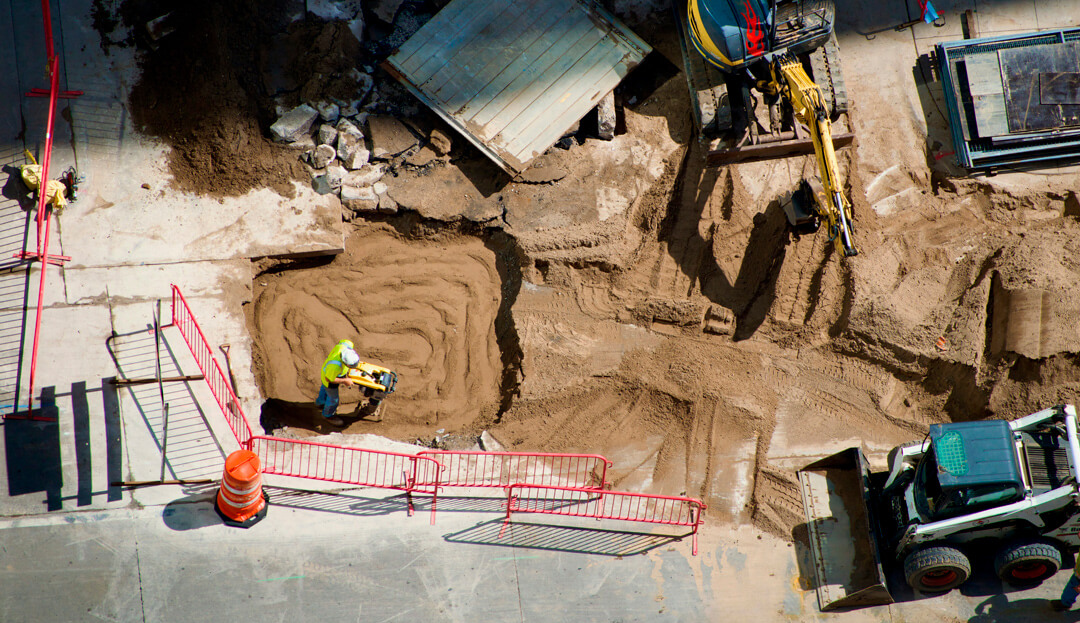
As B.C. replaces infrastructure built generations ago, the challenge is not simply building something new. It is doing so safely and efficiently while the communities around it keep moving.
Earlier this month, BC Hydro announced plans to replace two aging substations in Vancouver, including facilities originally built in 1947 and 1952. Together, the replacement substations will eventually serve approximately 100,000 customers. In the West End, the new substation will be constructed underground to help meet growing electricity demand within one of the most densely developed parts of the province.
Berto Contractors is supporting this major infrastructure project by completing an extensive relocation of existing TELUS infrastructure required to accommodate construction of the new substation. The work is an important enabling component of the broader project, helping prepare the site and surrounding infrastructure for BC Hydro’s planned expansion.
The announcement is one example of a much larger challenge facing British Columbia. Across the province, roads, bridges, electrical systems, water and wastewater networks and underground utilities built decades ago are being asked to support communities that have changed considerably since those assets were first constructed. Populations have grown, technology has changed, demand for electricity has increased and climate resilience has become a greater consideration. In many communities, there is also considerably more infrastructure occupying the same amount of space.
“Some of the most important infrastructure work happening in B.C. today is taking place in communities that are already built and already busy,” says Sonia Hartwell, President of Berto Contractors. “The challenge is finding the safest and most practical way to renew that infrastructure while recognizing that the roads, utilities, businesses and communities around the project still need to function.”
Replacing what is aging will be a significant part of building what comes next.
The Infrastructure Challenge B.C. Can’t Avoid
Infrastructure is designed to serve communities for decades, but every asset eventually reaches a point where maintenance alone is no longer enough. Many of the systems British Columbians rely on every day have already been operating for generations, making rehabilitation, replacement and significant upgrades an increasingly important part of the province’s infrastructure agenda.
At the same time, B.C.’s requirements continue to grow. Population growth is putting additional pressure on transportation networks and municipal services, while electrification is increasing demand on the power system. Communities are also considering how roads, utilities, drainage systems and other assets will perform as weather patterns change and extreme events place new pressures on infrastructure.
The result is a difficult balancing act. B.C. needs to maintain and renew the infrastructure it already has while simultaneously creating additional capacity for the decades ahead. Much of that work will happen alongside the people, businesses and systems that depend on it every day.
Rebuilding in Place Changes the Job
Constructing infrastructure on an open site is fundamentally different from replacing it within an established community. Existing corridors can contain utilities installed over several generations, active transportation routes, neighbouring businesses, homes, pedestrian traffic and other construction activity. Space for equipment, materials and staging may be limited, while access and essential services often need to be maintained throughout much of the work.
The planned replacement of BC Hydro’s West End substation provides an interesting illustration. Replacing electrical infrastructure that has been operating since the middle of the last century is already a significant undertaking. Constructing its replacement underground within a dense urban neighbourhood introduces additional considerations around excavation, access, logistics, staging and coordination with existing infrastructure.
These conditions make sequencing an important part of the construction strategy. Site access, temporary works, traffic management, utility coordination and construction staging need to be considered together because a decision made in one area can have consequences elsewhere on the project.
Good planning does more than improve efficiency. It can help crews work more safely, reduce unnecessary disruption and identify potential conflicts before they become problems in the field.
What Lies Beneath the Surface
Some of the greatest challenges on an infrastructure renewal project are not visible from the surface.
Beneath established communities is an increasingly complex network of water and sewer lines, electrical systems, natural gas infrastructure, telecommunications, stormwater systems and services connecting individual properties. Those assets may have been installed decades apart under different standards and documentation practices.
Drawings and records provide essential information, but conditions encountered in the field do not always perfectly reflect what appears on paper. Locating, investigation and careful excavation planning therefore become particularly important when new infrastructure has to be installed around existing systems.
The issue received renewed attention in B.C. this September when BC 1 Call and the Irrigation Industry Association of British Columbia announced a partnership focused on excavation safety, damage prevention and the protection of underground infrastructure.
For civil contractors, knowing what is already in the ground is an essential part of determining how the work can proceed safely. As underground corridors become more congested, coordination among owners, engineers, utility providers and contractors becomes even more important.
Building While Communities Keep Moving
Infrastructure construction creates disruption, but managing that disruption is part of delivering the work successfully.
A road may need to be rebuilt while people still need to get to work and businesses still need customers to reach them. A water system may require replacement while homes and commercial properties continue to require service. Utilities may need to be relocated while other infrastructure within the same corridor remains operational.
These conditions make continuity an important consideration during infrastructure renewal. Phased construction, temporary servicing, traffic management, carefully planned shutdowns and coordinated scheduling can all help maintain access and essential services while work progresses.
Clear communication supports that process. Owners, contractors, consultants, utilities, municipalities and other stakeholders need a shared understanding of what is happening, when individual stages of work will occur and how those activities affect the rest of the project.
Much of this work disappears once construction is complete. A person travelling along a finished road or using a newly upgraded utility may never see the temporary works, sequencing and coordination that allowed the project to proceed. Those decisions, however, can have an enormous influence on safety, productivity, schedule and the experience of the surrounding community during construction.
Building for What Comes Next
Replacing aging infrastructure presents an opportunity to consider what communities will require decades from now, rather than simply reproducing what was built decades ago.
Infrastructure constructed today will need to support continued population growth, increasing electrical demand, changing transportation patterns and evolving environmental conditions. Roads, utilities and other major assets may remain in service for generations, making decisions about capacity, resilience and future maintenance particularly important during the planning and design stages.
Constructability belongs in that conversation. Decisions made before construction begins influence how efficiently infrastructure can be built, how safely crews can complete the work and how easily those assets can eventually be maintained or upgraded.
Practical construction knowledge can also help identify potential conflicts earlier in the process. When owners, designers and contractors have opportunities to consider field conditions, access requirements, staging and sequencing before work reaches the construction phase, problems that might otherwise emerge on site can often be addressed much earlier.
Building the Next 75 Years
The infrastructure constructed across British Columbia in the middle of the last century helped support decades of economic and community growth. Many of those systems are now entering another stage of their lifecycle at the same time that the province is asking more of its infrastructure than ever before.
Renewing those assets will require significant investment and considerable technical expertise, but the work also carries a longer-term responsibility.
“When we build or renew infrastructure, we have to remember that we’re not only solving the problem in front of us today,” says Hartwell. “The work we do can be there for decades. Taking the time to build it safely, build it properly and think about how it will serve the community over the long term is what gives that work lasting value.”
The roads, utilities, power systems and other infrastructure being renewed today may serve British Columbians for generations. Delivering them successfully will require careful planning, strong coordination between disciplines, safe execution and a practical understanding of how construction affects the communities surrounding it.
The decisions made during this period of renewal will help determine what B.C.’s infrastructure looks like for decades to come. Done well, the result will be infrastructure that is safer, more resilient and better prepared to support the next generation of British Columbians.
…